
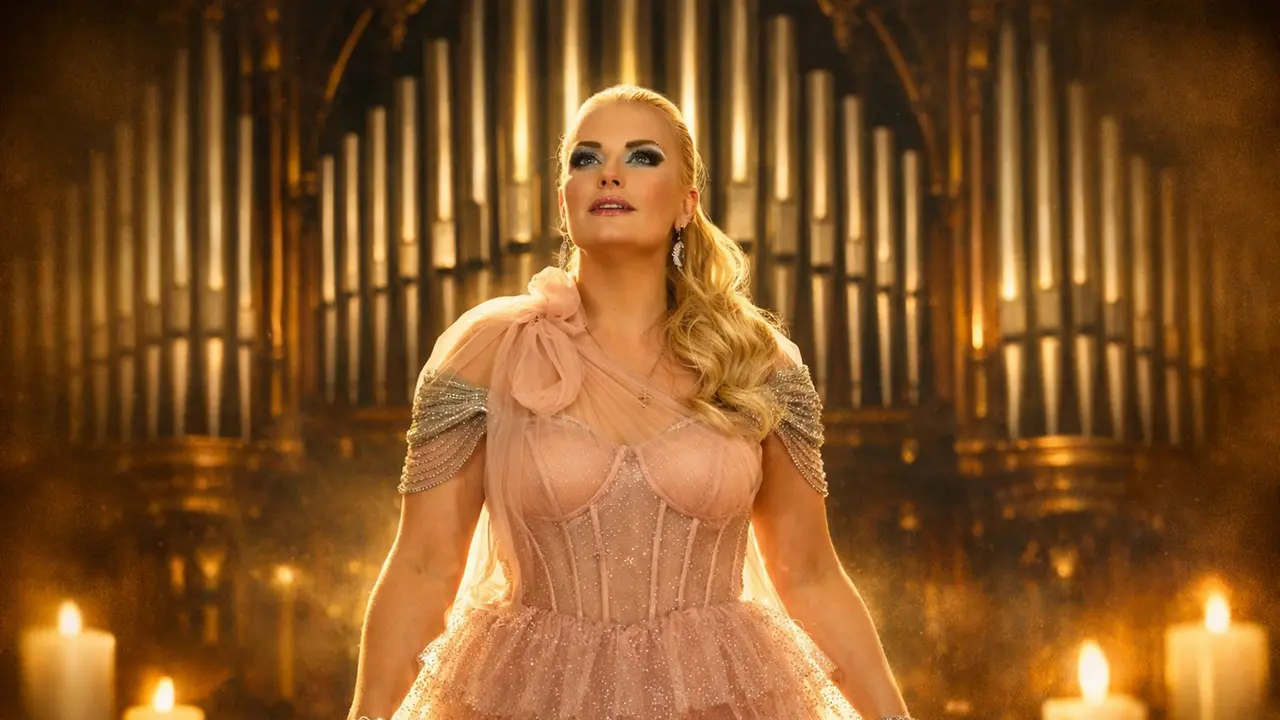
In the candlelit nave of Tallinn’s Kaarli Kirik, Maria Veretenina’s voice rose like a prayer — Verdi’s Ave Maria reborn through the resonance of the great Walcker organ.
The soprano’s crystalline tone and Szostak’s solemn accompaniment transformed Desdemona’s lament into a living meditation on faith and fate. The evening began in silence. The audience, gathered beneath the high Gothic vaults of Kaarli Kirik, seemed to hold its breath as the first organ chords unfurled — deep, ancient, and tender. Then Maria Veretenina stepped forward, her presence luminous against the dark wood and gold of the altar.
Her voice entered softly, almost hesitant, as if testing the air for divine permission. Verdi’s Ave Maria — Desdemona’s final prayer before tragedy — found new life in her phrasing: each note suspended between devotion and despair. The organ, played by Michał Szostak, answered her with solemn echoes, weaving a dialogue between heaven and earth.
As the melody ascended, the church itself seemed to respond — the marble, the stained glass, the centuries of whispered prayers. Veretenina’s soprano expanded into the space, pure yet trembling with emotion. The audience felt not performance but revelation: a moment where music became confession.
In the final cadence, her voice faded into the organ’s lingering resonance. For a heartbeat, there was nothing — only the memory of sound. Then applause broke the stillness, reverent and restrained, as if the listeners feared to disturb the sanctity of what had just occurred.
This was not merely a concert. It was a communion of art and spirit — a soprano and an organist invoking Verdi’s vision of grace amid sorrow. In that August evening, Tallinn witnessed Ave Maria not as opera, but as prayer.